On the ground, I found the place quite unlike my imagination. What I saw there was nearly identical to every major Japanese city, big buildings, streets bustling with cars and people, you name it. The only difference were the tropical palm trees that lined the medians of the larger avenues. As we drove north out of the city proper, the overall look didn't change much, lots of cars, streets, buildings... no farmland, and scant few remnant forests on steep rocky hills. These scenes were pervasive across the south end of the island.
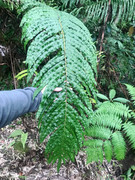
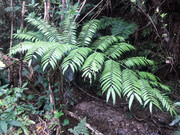
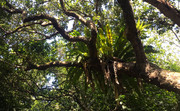
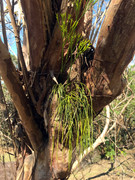
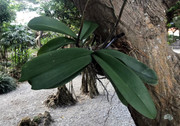
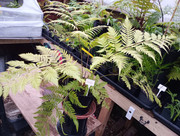
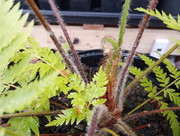
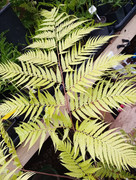
There were a lot of ferns all about. Here are some we saw.
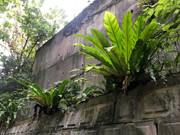
The roads in Okinawa are extremely narrow, and you have to be on your toes when walking or driving. This road near the castle is actually blasted through the coral rock hillside, and serves as a great place for epiphytic ferns to take hold.
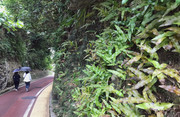
A common, almost weedy, epiphytic fern is Asplenium australasicum, one of the "birdnest ferns". It is native and grows on walls, in trees and even semi terrestrially. Here you can see it growing on the cement retainer wall along a street. They are nearly ubiquitous, even in deep urban environments. In forest settings with high humidity each rosette can reach over 2 meters in diameter. Big weed! Unlike its cousin A. antiquum, it is not at all cold hardy, and quickly succumbs to even short periods of frost.
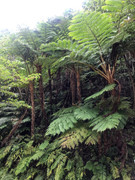
The most common and largest of the native tree ferns is Cyathea (Sphaeorpteris) lepifera. This can attain heights of 8 meters or more, and are fast growers, putting on as much as 50 cm of vertical trunk annually. They are most commonly seen in deep forests, but often reach out of the canopy. I've also seen them growing in scrubby forests along the coastlines, nearly within the salt spray zone just behind beach dunes. It however is decidedly subtropical, unable to withstand much frost, and dying outright during prolonged cold exposure (more than a day).
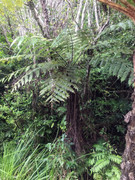
The second most common tree fern is Cyathea (Alisophila) spinulosa, a fern found throughout southern Asia. These are a bit more stout in size, slower growing, and the frond stems are covered in spike-like thorns, hence the name. I grew this one in Fukuoka for quite a while but had to protect them in winter. The winter of 2022 was just a bit too cold and I lost them.
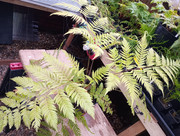
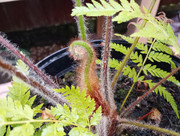
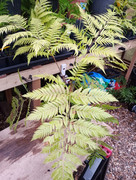
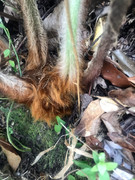
A strange fern that grows hairy trailing rhizomes is Cibotium taiwanense. It has the nickname of "monkey head fern". The hairs are soft to the touch and truly do feel like animal fur. While other members of Cibotium are tree ferns, this species remains clinging to the ground, though fronds can be up to 3 meters long each. Years ago there was a discussion that included Steve Pope about this plant's identity. Some authorities call the Japanese plants C. barometz, but that species seems to be larger in size than this one, and more tropical. So I'd call it C. taiwanense with some trepidation. It is surprisingly cold hardy in Fukuoka, withstanding long, cold periods (for us).
More pics to follow.